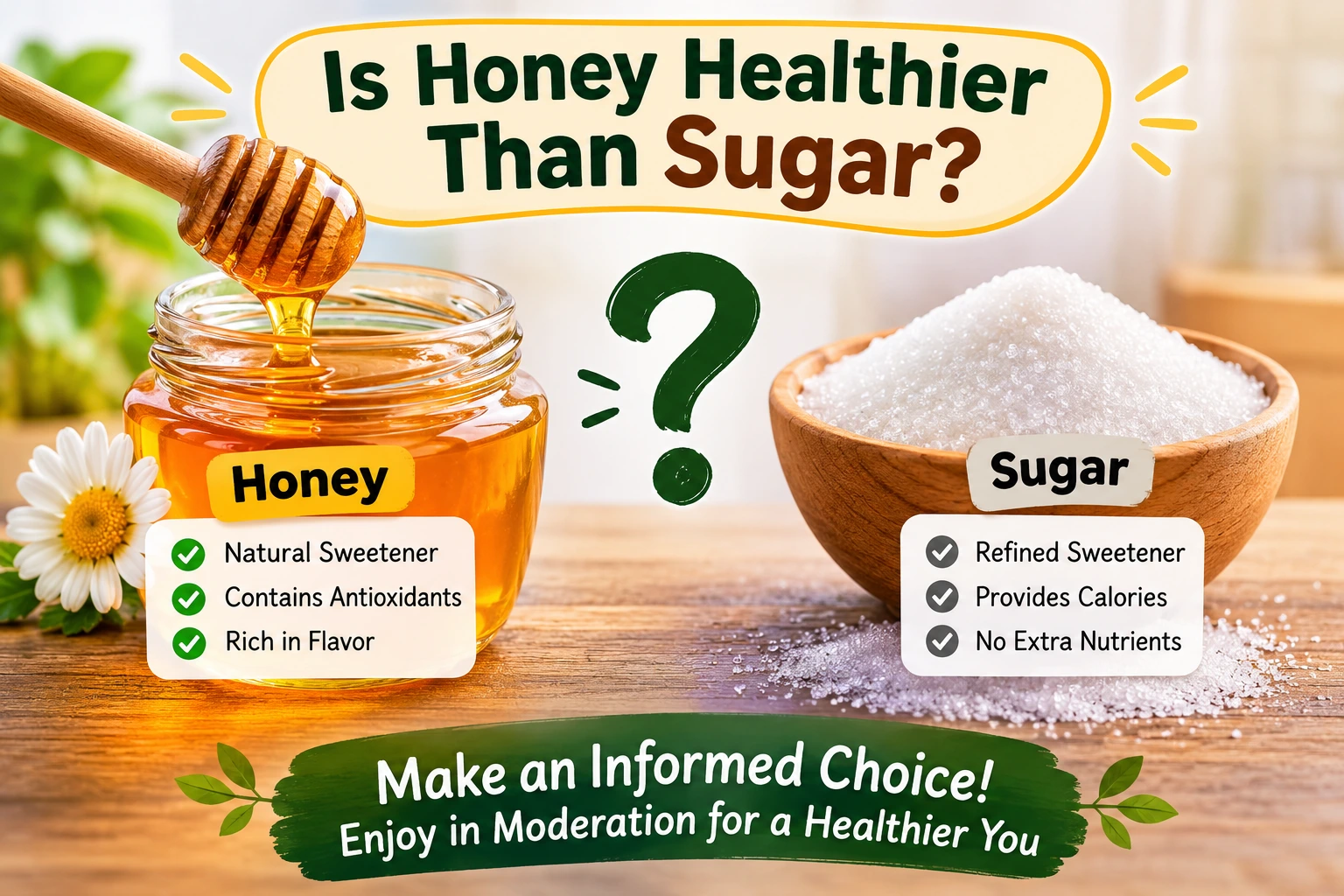
Honey is often considered a healthier alternative to white sugar because it is naturally produced by bees and contains small amounts of antioxidants and other plant-derived compounds. But does that mean honey is actually better for your health? The answer is more complicated than you might think. Both honey and table sugar contain simple sugars, provide calories, and should be consumed in moderation. Understanding their nutritional differences can help you make a more informed choice for your everyday diet.
1. What Is the Difference Between Honey and Sugar?
Honey is a natural sweetener made by honeybees from flower nectar. It primarily contains glucose and fructose, along with water and small amounts of other naturally occurring compounds. Its taste, color, and texture can vary depending on the flowers from which the nectar is collected.
White table sugar, on the other hand, is refined sucrose, usually produced from sugarcane or sugar beets. It consists of glucose and fructose chemically joined together and provides sweetness without the additional naturally occurring compounds found in honey.
2. Honey vs Sugar: Nutritional Comparison
Honey and white sugar have different nutritional compositions. A tablespoon of honey generally provides around 60–64 calories and approximately 17 grams of carbohydrates, while a tablespoon of granulated white sugar provides around 48–49 calories and approximately 13 grams of carbohydrates. Exact values depend on the product and serving measurement.
Honey contains small amounts of compounds such as antioxidants, enzymes, and minerals. However, these quantities are generally too small to make ordinary servings of honey a significant source of essential nutrients. White sugar provides almost entirely carbohydrates in the form of sucrose.
3. Potential Benefits of Honey
Honey offers some characteristics that make it different from refined white sugar. Its stronger flavor may allow some people to use a smaller quantity while still enjoying the desired sweetness.
- Contains small amounts of naturally occurring antioxidant compounds.
- Provides a distinctive flavor that varies according to floral source.
- Can be used in tea, milk, breakfast foods, sauces, and homemade recipes.
- Offers a convenient liquid sweetener for cooking and baking.
- May help soothe cough symptoms in some adults and children over one year of age.
Although honey contains some beneficial compounds, it should not be considered a medicine or a substitute for a balanced diet. Its nutritional advantages should also not be exaggerated.
4. Is Honey Better for Blood Sugar Levels?
Honey is sometimes promoted as a better option for blood sugar management because it contains glucose and fructose in different proportions from table sugar. However, honey still contains substantial amounts of sugar and can increase blood glucose levels.
The effect on blood glucose can vary depending on the amount consumed, the type of honey, the rest of the meal, and individual health factors. People living with diabetes should count honey as a source of carbohydrates and monitor their blood glucose according to their healthcare professional's advice.
5. Does Honey Contain More Calories Than Sugar?
When comparing equal tablespoon measurements, honey generally contains more calories than granulated sugar because honey is denser and a tablespoon weighs more. However, honey contains more water and fewer calories per 100 grams than pure white sugar. This is why it is important to compare equivalent serving sizes rather than assuming that one sweetener is always lower in calories.
If your goal is to reduce calorie intake, the amount of sweetener you consume matters more than simply replacing sugar with honey. Using smaller portions of either sweetener is a practical approach.
6. Can You Replace White Sugar with Honey?
Yes. Honey can replace white sugar in many everyday recipes, although the results may differ in taste, texture, and moisture. Because honey is sweeter than table sugar in some applications, you may be able to use less depending on your recipe.
- Add a small amount of honey to tea or warm milk.
- Use honey as a topping for oatmeal and breakfast bowls.
- Mix honey into homemade salad dressings.
- Use honey to sweeten plain yogurt.
- Experiment with honey in homemade sauces and baking recipes.
Remember that replacing sugar with honey does not eliminate added or free sugars from your diet. Both should be used thoughtfully.
7. Important Things to Know Before Eating Honey
Although honey can be enjoyed by most adults as part of a balanced diet, there are some important precautions to remember.
- Never give honey to babies younger than 12 months because it may contain Clostridium botulinum spores that can cause infant botulism.
- People with diabetes should account for honey's carbohydrate and sugar content.
- Excessive consumption of honey can contribute to excessive calorie intake and tooth decay.
- Natural or raw honey is still a source of free sugars and should not be consumed without portion awareness.
- People with known allergies or sensitivities to honey or bee-related products should seek appropriate medical advice.
8. How to Choose Good Quality Honey
If you enjoy honey, choosing a product with clear labeling and reliable sourcing is important. Look for information about the ingredients, country or region of origin, packaging, and producer. Pure honey should not have unnecessary added sweeteners or artificial flavoring if it is being sold as pure honey.
- Check that the ingredient list identifies honey as the product ingredient.
- Look for clear manufacturer and supplier information.
- Check packaging seals and storage instructions.
- Review batch details and best-before information.
- Choose a trusted seller with transparent product information.
The words raw, natural, and organic do not automatically prove that honey is authentic or superior in nutritional value. Product quality, sourcing, and trustworthy labeling matter.
9. So, Is Honey Healthier Than Sugar?
Honey has some nutritional differences compared with refined white sugar, including small amounts of naturally occurring antioxidant compounds and a distinctive flavor. However, both are concentrated sources of sugar, and neither should be treated as a health food or consumed without limits.
If you enjoy honey, it can be a flavorful alternative to refined sugar in many recipes. The most important factor is not simply which sweetener you choose, but how much you consume as part of your overall eating pattern.
My Trustbasket Tip
Choose honey from a reliable source, check its ingredients and packaging information, and enjoy it in sensible portions. Whether you use honey or white sugar, remember that a balanced diet is built on variety, moderation, whole foods, and informed choices.
Frequently Asked Questions
Is honey completely sugar-free?
No. Honey naturally contains glucose, fructose, and other sugars. It is not a sugar-free food.
Can people with diabetes eat honey?
People with diabetes may need to account for honey in their carbohydrate intake. Honey can raise blood glucose levels, so portion control and individual medical guidance are important.
Is raw honey healthier than regular honey?
Raw honey may retain more of certain naturally occurring compounds because it undergoes less processing. However, there is not enough evidence to conclude that raw honey provides major health advantages over all commercially processed honey.
Can honey help with weight loss?
Honey is not a proven weight-loss solution. It contains calories and sugars, so consuming large amounts can contribute to excess calorie intake.
Is honey safe for babies?
No. Honey should never be given to babies younger than 12 months because of the risk of infant botulism.