
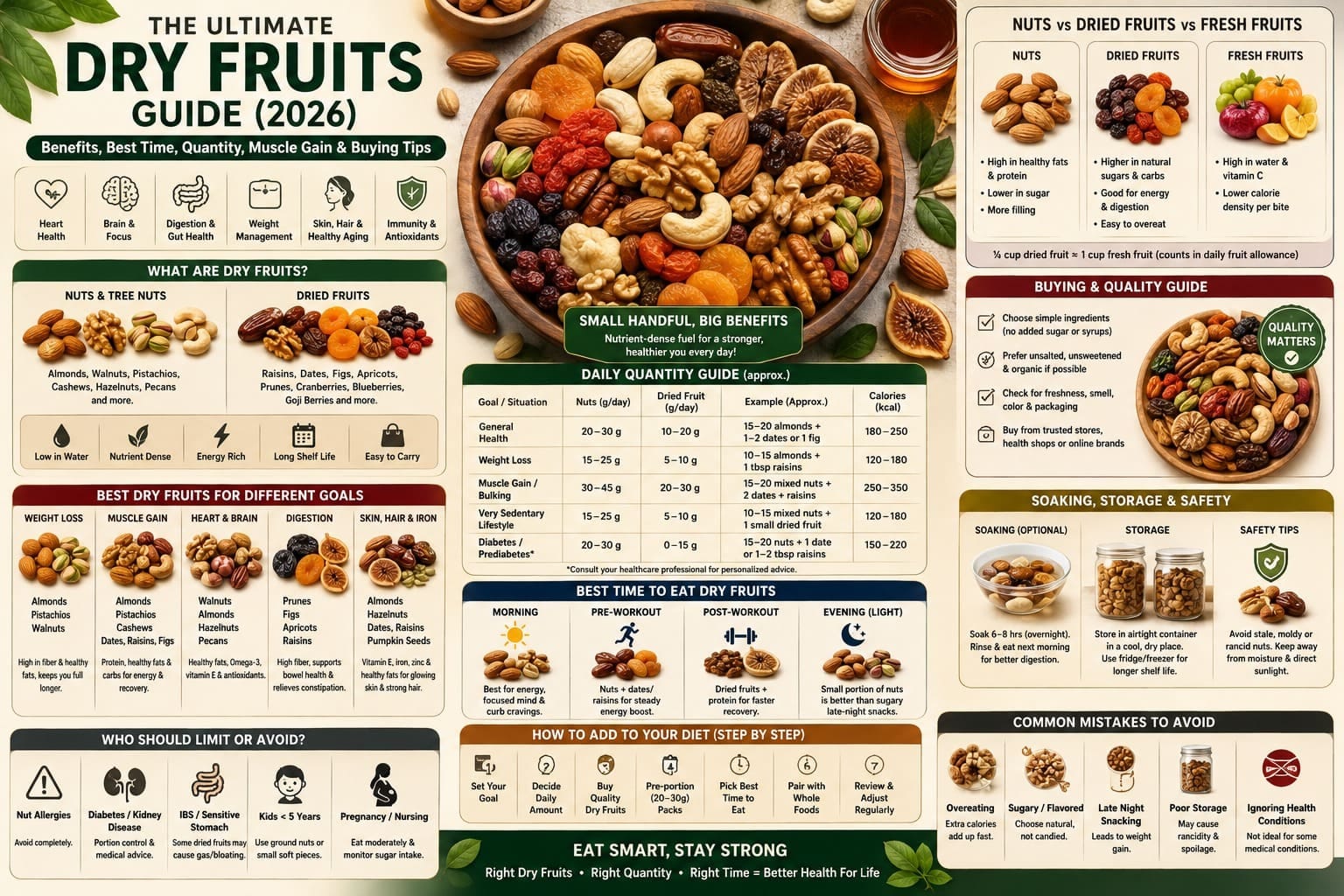
What Do We Mean by “Dry Fruits” in 2026?
When people say “dry fruits” today they usually mean two overlapping groups
Nuts and tree nuts almonds walnuts pistachios cashews hazelnuts pecans Brazil nuts etc.
Dried fruits raisins dates figs apricots prunes cranberries blueberries goji berries and more.
In Western nutrition these are separated as “nuts and seeds” vs “dried fruit”.
In India and much of the Middle East both are casually called “dry fruits” and often eaten together in mixes and festive sweets.
What unites them
- Low water content
- High concentration of calories fiber vitamins minerals and antioxidants
- Long shelf life and easy portability
This guide covers both nuts and dried fruits because that’s how most people actually snack a handful of mixed nuts raisins dates figs and seeds.
Why Dry Fruits Still Matter for Health
Even though supermarket shelves are filled with ultra processed snacks dry fruits are still one of the most effective ways to add real nutrients to your daily intake.
Heart and Metabolic Health
Nuts along with a few dried fruits can benefit heart health if they are used to replace refined snacks
- The good fats (mainly in almonds walnuts pistachios hazelnuts pecans) can assist in improving cholesterol patterns.
- Magnesium and potassium support healthy blood pressure.
- Soluble fiber in figs prunes raisins and apricots may help with cholesterol and blood sugar control.
- Polyphenols and antioxidants in nuts and deeply colored dried fruits help combat inflammation and oxidative stress.
Used consistently in small daily portions they complement an overall heart supportive eating pattern.
Brain Focus and Mood
Dry fruits are an ideal “smart snack” for students busy professionals and older adults
- Walnuts provide plant omega 3 (ALA) linked with brain function.
- Almonds pistachios and cashews provide vitamin E B vitamins and minerals involved in nerve communication.
- Dates and raisins offer quick release carbohydrates with minerals useful before intense mental work.
You still need sleep hydration and balanced meals but a thoughtful dry fruit habit can support mental performance.
Digestion Gut Health and Constipation
Many dried fruits are naturally rich in fiber and prebiotics
- Prunes are well known for gentle laxative effects.
- Figs and apricots provide fiber plus minerals that support digestion.
- Raisins can help soften stool when part of a high fiber diet.
If you struggle with constipation small daily portions of these plus plenty of water can make a noticeable difference.
Weight Management Friend or Foe?
Dry fruits are calorie dense which worries many people trying to lose weight. The reality is nuanced
- The protein + fiber + fat combination in nuts creates strong satiety.
- Some fat and fiber calories in nuts are not fully absorbed.
- Replacing chips cookies and candy with measured nuts can reduce cravings and overall calorie damage.
The key is portion control. A weighed handful can be your best ally eating straight from a 1 kg bag can quietly destroy a calorie deficit.
Skin Hair and Healthy Aging
Dry fruits will not probably act as an instant wrinkle remover. However they are still a good source of Vitamin E rich nuts like almonds and hazelnuts which support skin barrier health. Zinc iron and healthy fats can only lead to stronger hair if there is enough protein in the diet.
Antioxidants from berries raisins dates and figs can help in reducing the damage caused by oxidation with time.
Consider them as nutrient dense support staff working quietly behind the scenes along with the rest of your diet.
Dry Fruits vs Dried Fruits vs Fresh Fruits
It helps to understand the trade offs between nuts dried fruit and fresh fruit.
Nuts vs Dried Fruit Quick Contrast
Nuts (almonds walnuts pistachios etc.)
- Higher in fat and protein lower in sugar
- Excellent for satiety heart health and muscle support
Dried fruit (raisins dates figs etc.)
- Higher in natural sugars and carbohydrates
- Great for energy digestion and iron but easy to overeat
Dried Fruit vs Fresh Fruit
Fresh fruit provides more water and often vitamin C with lower calorie density per bite.
Dried fruit compresses the same fruit into a smaller sweeter package
- Great for hiking travel pre or post workout
- Not ideal in large amounts for people watching blood sugar or calories
Most national guidelines (like MyPlate) count about ¼ cup of dried fruit as roughly equal to 1 cup of fruit. The idea is that dried fruit fits into your total daily fruit allowance not in addition to it.
How Much Dry Fruits Per Day? A Practical Quantity Guide
In one sentence Most healthy adults do well with 20 40 g of mixed dry fruits per day (roughly a small handful) leaning more on nuts and being modest with sugary dried fruits.
Integrated Portion Framework
The table below gives approximate daily amounts. Always adjust for your body size activity existing diet and any medical advice.
Goal / Situation
Nuts (g/day)
Dried fruit (g/day)
Example pieces per day (approx.)
Approx. kcal
General health maintenance
20 30 g
10 20 g
15 20 almonds + 1 2 dates or 1 small fig
180 250
Weight loss / fat loss
15 25 g
5 10 g
10 15 almonds + 1 tbsp raisins
120 180
Muscle gain / bulking
30 45 g
20 30 g
15 20 mixed nuts + 2 dates + small handful raisins
250 350
Very sedentary lifestyle
15 25 g
5 10 g
10 15 mixed nuts + 1 small dried fruit
120 180
Diabetes / prediabetes*
20 30 g
0 15 g
15 20 nuts and if tolerated 1 date or 1 2 tbsp raisins
150 220
*People with diabetes or kidney disease should personalise these numbers with their healthcare team.
Visual Cues (Without a Scale)
- Almonds: ~20–24 nuts ≈ 28 g
- Walnuts: ~7–9 halves ≈ 28 g
- Pistachios (shelled): ~40–45 kernels ≈ 28 g
- Raisins: a small closed handful ≈ 20–30 g
- Dates (Medjool): 1 large ≈ 60–70 kcal
If you rely on handfuls, use small, cupped-hand portions, not overflowing fists.
Best Time to Eat Dry Fruits (By Goal)
Overall Best Time
For most people the best time to eat dry fruits is in the morning or as a planned mid morning/afternoon snack when you need steady energy and appetite control.
Morning and Empty Stomach
A small mix of soaked or plain nuts with or after breakfast can
- Stabilise blood sugar
- Reduce mid morning junk food cravings
- Provide long lasting energy for work or study
If you have sensitive digestion or reflux it’s usually safer with breakfast rather than completely empty stomach.
Pre Workout and Post Workout
Pre‑workout (45 90 minutes before)
15 20 g nuts + 1 2 dates or a small handful of raisins
Good for steady energy and preventing hunger crashes.
Post‑workout (within 1 2 hours)
Combine dried fruit with a protein source Greek yogurt + raisins whey shake + dates tofu smoothie + figs.
The carbs help replenish glycogen nuts complement protein intake over the day.
Evening and Night
However if you want to you can eat dry fruits in the evening just make sure it is light.A small handful of nuts (10 15 g) is far healthier than a dried fruit sugar binge.If you have problems with reflux or blood sugar swings a handful of dates raisins or figs can be heavy for you.Weight loss is related to late night snacking, even if it's dry fruits it is often the source of extra calories. You can be very strict with the portion or completely avoid nighttime nibbling.
Best Dry Fruits for Different Goals
For Weight Loss and Appetite Control
Choose dry fruits that deliver satiety without too much sugar
- Almonds high in vitamin E fiber and healthy fats good evidence for weight management.
- Pistachios relatively high in protein shelling them can slow you down.
- Walnuts rich in healthy fats and may help with fullness.
How to use
- 15 25 g nuts as a planned snack between meals
- Avoid mindless grazing while watching TV or scrolling your phone.
For Muscle Gain and Gym Performance
Here the goal is more calories and convenient fuel not less.
Prioritise
- Almonds pistachios cashews contribute protein calories and minerals for muscle function.
- Walnuts add healthy fats and some omega 3.
- Dates raisins figs fast acting carbs to support training.
Example “gym stack”
- Pre workout 10 15 g almonds + 10 15 g pistachios + 2 dates
- Post workout whey or plant protein shake + 10 15 g raisins or 1 2 dates
For Heart and Brain Health
Emphasise nuts with more beneficial fats
- Walnuts plant omega 3 and polyphenols.
- Almonds hazelnuts pecans vitamin E and monounsaturated fats.
- Pistachios potassium and beneficial fats.
A daily 20 30 g serving of mixed nuts alongside a vegetable rich diet is a good long term habit.
For Digestion and Constipation
Focus on natural laxative style dried fruits:
- Prunes classic choice for constipation.
- Figs and apricots high in fiber helpful in small regular amounts.
- Raisins softer stool and extra fiber.
Start small (1 2 prunes 1 2 figs) and increase slowly with plenty of water. For IBS or sensitive guts test your tolerance carefully.
For Skin Hair and Iron Levels
Useful options include
- Almonds and hazelnuts vitamin E and healthy fats for skin barrier support.
- Dates raisins apricots contain iron and other minerals that support haemoglobin production helpful in anaemia focused diets.
- Pumpkin and sunflower seeds good add ons for zinc and healthy fats.
Who Should Limit or Avoid Dry Fruits?
Dry fruits are not automatically a fit for everyone. Use extra caution if you have
- Nut or peanut allergies even trace amounts can cause severe reactions. Avoid mixed products processed in facilities with nuts if you’re highly sensitive.
- Diabetes or prediabetes nuts are typically favourable dried fruit must be tightly portion controlled and paired with protein or fat.
- Kidney disease certain nuts are high in potassium phosphorus and oxalates follow your renal team’s guidance.
- IBS or extremely sensitive digestion prunes figs and some dried fruits contain a lot of fermentable carbs which might lead to gas or discomfort.
- Little kids whole nuts are a choking hazard. It is better to use finely ground nuts thin nut butters or only very small pieces that are closely supervised.
- Pregnant and nursing women may have dried fruits moderately but they should be aware of the total calories and blood sugar levels when eating high sugar dried fruits and large portions.
How to Add Dry Fruits to Your Daily Diet (Step by Step)
If you’re starting from scratch this simple routine works in most lifestyles
- Define your goal weight loss maintenance muscle gain or better general health.
- Set a daily gram target from the earlier table (e.g 25 g for weight loss 35 g for muscle gain).
- Buy a basic mix almonds walnuts and pistachios plus one or two dried fruits like raisins or dates.
- Pre portion into small containers or bags (e.g. 20 30 g each) once a week.
- Slot portions into specific times mid morning snack pre workout or afternoon slump.
- Combine with whole foods sprinkle onto oatmeal mix into yogurt add to salads or pair with fresh fruit.
- Review every 2 3 weeks if weight is creeping up or down faster than you’d like adjust your portions by 5 10 g per day.
This transforms dry fruits from random handfuls into a structured part of your routine.
Buying & Quality Guide Online and “Near Me”
Whether you’re shopping in New York London Mumbai Dubai Sydney or Singapore the fundamentals of quality are similar.
Where to Buy
Common options
- Supermarkets and club stores convenient often the best deals on family size packs of almonds walnuts raisins and mixed nuts.
- Health food and organic stores more unsalted unsweetened and organic choices good for sulphite free dried fruit.
- Ethnic groceries (Indian Middle Eastern Mediterranean) often excellent for dates (Medjool Ajwa Deglet Noor) figs pistachios and specialty almonds in cities like Toronto Houston Birmingham or Doha.
- Online marketplaces and direct to consumer brands huge variety reviews subscription options and “dry fruits shop near me” style same day delivery in many urban areas.
How to Read Labels and Ingredients
Aim for simplicity
- Prefer ingredient lists like “Almonds” or “Raisins” nothing else.
Avoid or limit
- Added sugar glucose syrup corn syrup
- Hydrogenated oils or poor quality frying oils
- Artificial colours and flavours
- Very high sodium “party mixes”
For dried fruit look for no added sugar or unsweetened versions where possible. If a product is very bright check for sulfites some people are sensitive and in general it’s fine to choose sulphite free if available.
Freshness and Value Checks
Before you commit to a big pack
- Check best before date packaging integrity and whether the shop has high turnover.
- Avoid bags with visible insects webbing excessive broken pieces or oil stains.
- Smell nuts when possible rancid nuts can smell paint like or unusually bitter.
- On pricing expect pistachios and some specialty nuts to cost more per kg than almonds and raisins. Buying from wholesale clubs or larger ethnic markets in cities like Los Angeles Manchester or Bengaluru can significantly reduce the per kg cost.
Soaking Storage and Keeping Dry Fruits Safe
Should You Soak Dry Fruits?
Soaking is common in India and the Middle East often linked to Ayurveda. It can
- Soften texture for easier chewing
- Make nuts feel gentler on the stomach for some people
- Be convenient as part of a morning ritual
How to do it
- Rinse the nuts or dried fruit quickly.
- Place in a clean bowl and cover with room temperature or cool water.
- Soak for around 6 8 hours (overnight) in the fridge especially in hot climates.
- Drain rinse and eat the next morning.
Not every dry fruit needs soaking and it’s optional. If you dislike the texture or don’t notice any difference eat them plain.
How to Store Dry Fruits
To maximise shelf life and safety
- Keep dry fruits in airtight containers away from heat moisture and direct sunlight.
- For 1 3 months a cool pantry or cupboard is usually fine.
- For longer or in hot humid regions use the refrigerator or freezer especially for high fat nuts like walnuts and pecans.
- Always seal bags after opening and avoid leaving scoops or damp spoons inside jars.
- If something smells off tastes unusually bitter or shows visible mold or insects don’t eat it.
Side Effects Risks and Common Mistakes
Most problems arise not from dry fruits themselves but from how we use them.
Common pitfalls
- Overeating “healthy” snacks A couple of extra handfuls a day can easily add 200 300 kcal and stall fat loss or lead to gradual weight gain.
- Relying on sweetened or candied versions Honey roasted nuts and sugary cranberries behave more like desserts than health foods.
- Ignoring dental health Sticky dried fruits (especially raisins and dates) can cling to teeth and contribute to cavities if you snack frequently and don’t maintain good oral hygiene.
- Not considering medical conditions Large servings of high sugar dried fruit are risky for poorly controlled diabetes high potassium mixes may be problematic in kidney disease.
- Nuts that have gone stale or turned rancid develop oxidized fats which taste bad and may negatively affect your health.
A little attention to portion sizes ingredient lists storage and brushing your teeth goes a long way.
FAQs
1.Is eating dry fruits every day healthy or excessive?
Yes most healthy adults can enjoy dry fruits every day in small measured portions. Around 20 40 g of mostly nuts plus a little dried fruit fits well into many eating patterns when total calories and any health conditions are considered.
2. How many almonds walnuts cashews and pistachios per day is safe?
For a typical adult a good starting point is 20 30 g of mixed nuts per day such as
- 10 15 almonds
- 3 4 walnut halves
- 5 10 pistachios or cashews
You can mix and match staying within your overall gram target and adjusting for your energy needs.
3. Which dry fruits are best for weight loss?
For weight loss lean on almonds pistachios and walnuts because they provide good satiety with minimal sugar. Use dried fruits like dates raisins and figs in very small amounts or occasionally not as the main snack to keep calories and sugar in check.
4. Which dry fruits are good for muscle gain?
For muscle gain you want both calories and protein. Combine
- Almonds pistachios cashews and walnuts for fats and protein
- Dates raisins and figs for workout friendly carbs
Pair them with protein sources such as yogurt milk eggs tofu or a protein shake for best results.
5. Can I eat dry fruits at night especially for weight loss?
You can eat a small portion of nuts at night if you’re genuinely hungry but large servings of dates raisins or figs close to bedtime can add unnecessary calories and may affect digestion. For weight loss it’s usually better to front load your dry fruit intake earlier in the day.
6. Are roasted or flavored dry fruits healthy?
Dry roasted lightly salted nuts can be fine. The main issues are
- Deep fried nuts in cheap oils
- Very salty mixes
- Candied honey roasted or chocolate coated products
These should be treated as occasional treats not daily health foods. Check labels and pick “unsalted” or “lightly salted” whenever possible.
7. Which dry fruits should people with diabetes limit or avoid?
People with diabetes usually handle nuts better than large amounts of dried fruit. Dates raisins figs and sweetened cranberries can spike blood sugar if eaten freely. Small amounts may be acceptable when paired with protein or fat but the exact portion should be personalised with a healthcare professional.
8. Can kids under 5 eat dry fruits and nuts safely?
Yes but with precautions. Whole nuts are a choking hazard for young children. Use
- Finely ground nuts mixed into porridge
- Thinly spread nut butters
- Very small soft pieces of dried fruit supervised
Introduce potential allergens according to your paediatrician’s advice.
9. How can I tell if nuts or dry fruits have gone bad?
Warning signs include
- Strongly stale bitter or paint like smell
- Visible mold webbing or insects
- Excessive clumping stickiness or off colours
When in doubt throw it out. It’s never worth risking food poisoning or consuming rancid fats.
Conclusion
Dry fruits both nuts and dried fruits are compact powerful tools for better health smarter snacking and targeted goals like weight control and muscle gain.
Used well they can
- Support your heart brain digestion skin hair and bones
- Make it easier to hit calorie targets for fat loss or bulking
- Replace mindless ultra processed snacking with real food
The keys are simple
- Clarify your goal weight loss maintenance or muscle gain.
- Stick to a daily portion usually 20 40 g for most adults.
- Time them smartly mainly in the morning mid day and around workouts.
- Buy quality unsalted unsweetened products from trusted shops or online sellers with good storage habits.
- Respect your body adjust portions to your weight trend energy levels and any medical advice.
Treat dry fruits as precision tools not unlimited snacks and they can become one of the most useful enjoyable habits in your 2026 eating pattern.