
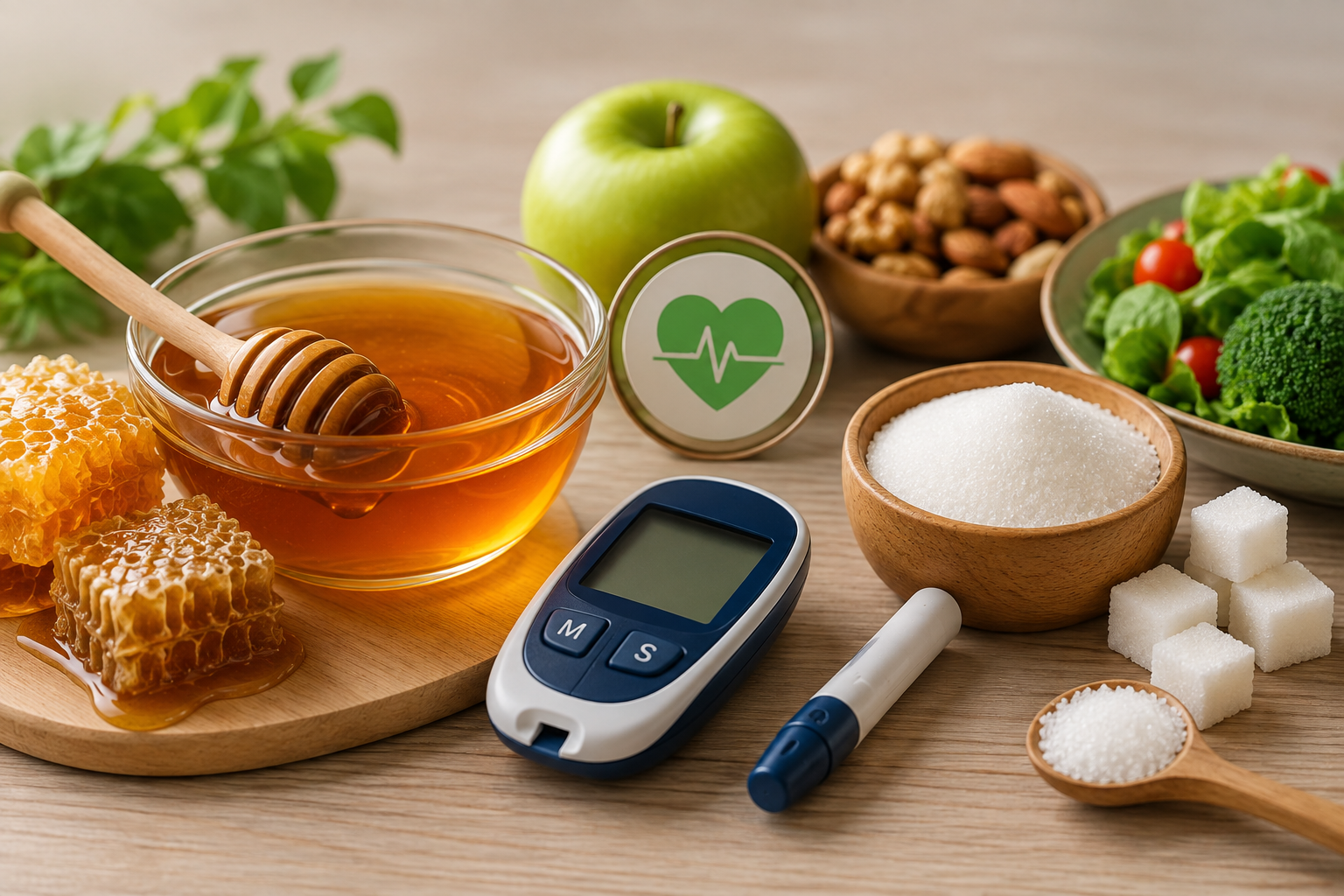
Introduction: Can Diabetics Really Eat Honey Without Spiking Blood Sugar?
The idea of using honey for diabetics feels comforting because honey comes from nature. Many people believe that if something is natural it must be safer than processed sugar. This belief causes confusion and in many cases real harm. When discussing diabetes emotions and traditions must step aside for facts. What truly matters is how honey and blood sugar levels react inside the body after consumption and how those changes affect long term diabetes management.
At its core diabetes is a disorder of blood glucose levels, insulin sensitivity and the body’s ability to manage carbohydrates. Honey despite its healthy image is still a concentrated source of sugar. It directly affects carbohydrate metabolism post meal blood sugar and the pancreas insulin function. The goal of this article is not to promote fear or false hope. It is to provide a clear honest science based answer to one question can diabetic patients eat honey without putting their health at risk?
By the end there will be no vague advice. You will understand when honey may be used when it should be avoided and why moderation is not optional but mandatory. This is not about trends or opinions. It is about clinical evidence real world glucometer readings and protecting long term health.
Honey vs Sugar for Diabetics Glycemic Index Carbs & Nutrition Compared
A lot of people wonder whether honey is actually better than sugar especially if you’re thinking about diabetes or healthy eating. The truth is to answer that you need to know a bit about how foods affect blood sugar things like the glycemic index and glycemic load which basically tell you how fast and how much a food can raise your blood sugar. These numbers are way more important than whether a sweetener seems “natural” or “refined.”
Honey does have a slightly lower glycemic index than white sugar but honestly the difference isn’t huge. Honey can still raise your blood sugar pretty quickly and because it’s packed with carbohydrates even a small spoonful can give a noticeable spike especially if your insulin sensitivity isn’t great.
Below is a simple comparison based on nutrition science and medical studies that can help answer whether honey is really better than sugar for people with diabetes without all the hype or emotional bias.
| Factor | Honey | White Sugar |
|---|---|---|
| glycemic index | 58 64 | 65 |
| glycemic load | Moderate | High |
| honey carbohydrate content | 6g per teaspoon | 4g per teaspoon |
| fructose content in honey | Higher | Lower |
| Calories | Slightly higher | Slightly lower |
| Trace nutrients | Small amounts | None |
Honey contains trace minerals and antioxidants but these nutrients do not offset its impact on blood glucose levels. From a metabolic perspective honey sugar composition still behaves like sugar once digestion begins. For diabetes physiology always outweighs perception.
How Honey Affects Blood Sugar Levels in People With Diabetes
When honey enters the digestive system it is rapidly broken down through carbohydrate digestion. Because honey is a liquid sugar its sugar absorption rate is fast. This causes a noticeable glucose spike after honey which appears quickly on glucometer readings. For someone managing diabetes these spikes are dangerous not just inconvenient.
The body responds to this spike by releasing insulin. In people with diabetes this honey insulin response is either insufficient or inefficient. For those with reduced insulin sensitivity the glucose remains in the bloodstream longer raising post meal blood sugar and stressing the endocrine system. Over time repeated spikes contribute to worsening insulin resistance and poor long term blood sugar control.
Some argue that honey causes a slower rise than sugar. While this may be partially true slower does not mean safe. A slower spike can still be high enough to disrupt diabetes management. The body does not reward sugar just because it arrived politely. From a biological standpoint honey remains a sugar that demands caution.
What Does Science Say? Research on Honey and Diabetes Explained
Scientific research on honey and diabetes presents a mixed picture which is often misused by marketing claims. Some honey clinical studies diabetes show that replacing refined sugar with small amounts of honey may improve cholesterol levels or markers of metabolic health. These findings are real but limited and often misunderstood.
At the same time multiple medical research studies confirm that honey increases fasting blood glucose raises HbA1c levels and increases insulin demand when used regularly. These outcomes are especially clear in long-term trials where honey intake was not strictly controlled. This is why selective quoting of studies creates dangerous myths.
If you look at the medical research on honey and diabetes it all comes down to one clear point honey isn’t harmful but it’s not a magic food either. When it comes to blood sugar and carbs honey basically acts like regular sugar. Real clinical studies don’t really back up the idea that honey can treat or protect against diabetes it’s more about moderation than miracle effects.
Potential Benefits of Honey for Diabetics (Without Overpromising)
Honey does offer some nutritional components that refined sugar lacks. It contains diabetes antioxidants in honey which may reduce inflammatory markers in the body. Chronic inflammation plays a role in poor metabolic health so this effect has limited relevance. However the antioxidant content is small and easily overshadowed by the sugar load.
Another possible benefit lies in taste satisfaction. Honey’s strong sweetness can sometimes reduce overall sugar intake when used carefully in a diabetic meal plan. For some individuals replacing larger amounts of sugar with a tiny amount of honey may support dietary moderation. This benefit depends entirely on discipline.
It is critical to understand the limits. These benefits do not improve insulin resistance do not stabilize blood glucose levels and do not protect against complications. Honey is not medicine. Any benefit exists only when portion control diabetes is strictly enforced.
The Real Risks of Honey for Diabetics You Should Not Ignore
The risks of honey are often minimized but they are real and measurable. One major danger is loss of portion control. Honey tastes mild and smooth which makes it easy to consume more than intended. Even a small excess increases honey blood sugar spike risk and worsens blood glucose control honey efforts.
Another serious risk comes from misunderstanding product labels. Claims around raw honey and diabetes or manuka honey diabetes suggest special protection. This is false. All honey raises blood sugar. The body does not recognize brand names origins or price tags during carbohydrate metabolism.
Over time repeated spikes increase the risk of diabetes complications including nerve damage cardiovascular stress and kidney strain. These outcomes are linked directly to poor long term blood sugar control not to whether sugar came from a plant or a factory.
The Safest Way to Eat Honey If You Have Diabetes
If honey is used at all, it must follow strict rules. Honey consumption guidelines diabetes emphasize that honey should never be eaten alone. Pairing honey with protein or fiber slows digestion and reduces the immediate glucose response. This pairing supports better post meal blood sugar stability.
Timing also matters. Eating honey while fasting can cause a sudden spike in blood sugar levels. This practice is especially harmful and undermines diabetes management. Honey should never replace medication or insulin. The pancreas insulin function cannot compensate for repeated sugar exposure.
Safety depends on awareness monitoring and restraint. Without careful blood sugar monitoring honey use becomes guesswork. Guesswork has no place in serious diabetes diet planning.
How Much Honey Can a Diabetic Eat? Safe Quantity Guidelines
Quantity is the deciding factor between limited safety and clear harm. The safest honey portion size diabetes is one teaspoon. This amount contains enough sugar to be detected by glucometer readings but is less likely to cause severe spikes when paired correctly.
Honey should not be a daily habit. Regular intake increases honey glycemic load raises HbA1c levels and worsens insulin resistance over time. Occasional use allows better long term blood sugar control than daily exposure.
Testing before and after intake provides real feedback. Blood sugar monitoring is the only reliable way to understand personal response. Without testing even small amounts can quietly damage metabolic health.
Type 1 vs Type 2 Diabetes Does Honey Affect Them Differently?
For honey for type 1 diabetes patients insulin dosing becomes more complex. Honey’s sugar content requires precise calculation. Even small errors can lead to high post meal blood sugar or dangerous lows. This makes honey an unnecessary complication for many.
For honey for type 2 diabetes patients the issue is different. Insulin resistance means the body already struggles to manage glucose. Adding honey increases stress on the endocrine system and worsens honey impact on insulin resistance over time.
Gestational diabetes follows similar patterns. Hormonal changes already affect insulin sensitivity making honey use especially risky. Across all types caution remains essential.
Common Myths About Honey and Diabetes You Need to Stop Believing
One widespread myth claims that honey is a diabetic friendly sweetener. This idea ignores honey sugar vs added sugar biology. Once digestion begins the body processes both similarly through carbohydrate metabolism.
Another myth promotes honey mixed with warm water as healthy. This practice causes rapid absorption and spikes fasting blood glucose. It directly undermines blood glucose control honey strategies and increases risk.
Marketing often replaces science. Understanding clinical evidence protects against these myths and supports smarter diabetes management decisions.
Conclusion Honey Is Not Medicine Just a Sweetener in Strict Moderation
The final answer is clear and evidence based. Is honey safe or unsafe for diabetics depends on discipline quantity and monitoring. Honey does not cure diabetes. It does not improve insulin sensitivity or repair metabolic damage.
When used rarely measured carefully and monitored closely honey may fit limited honey moderation diabetes plans. However medical guidance should always lead decisions. Smart diabetes dietary recommendations focus on control not comfort.