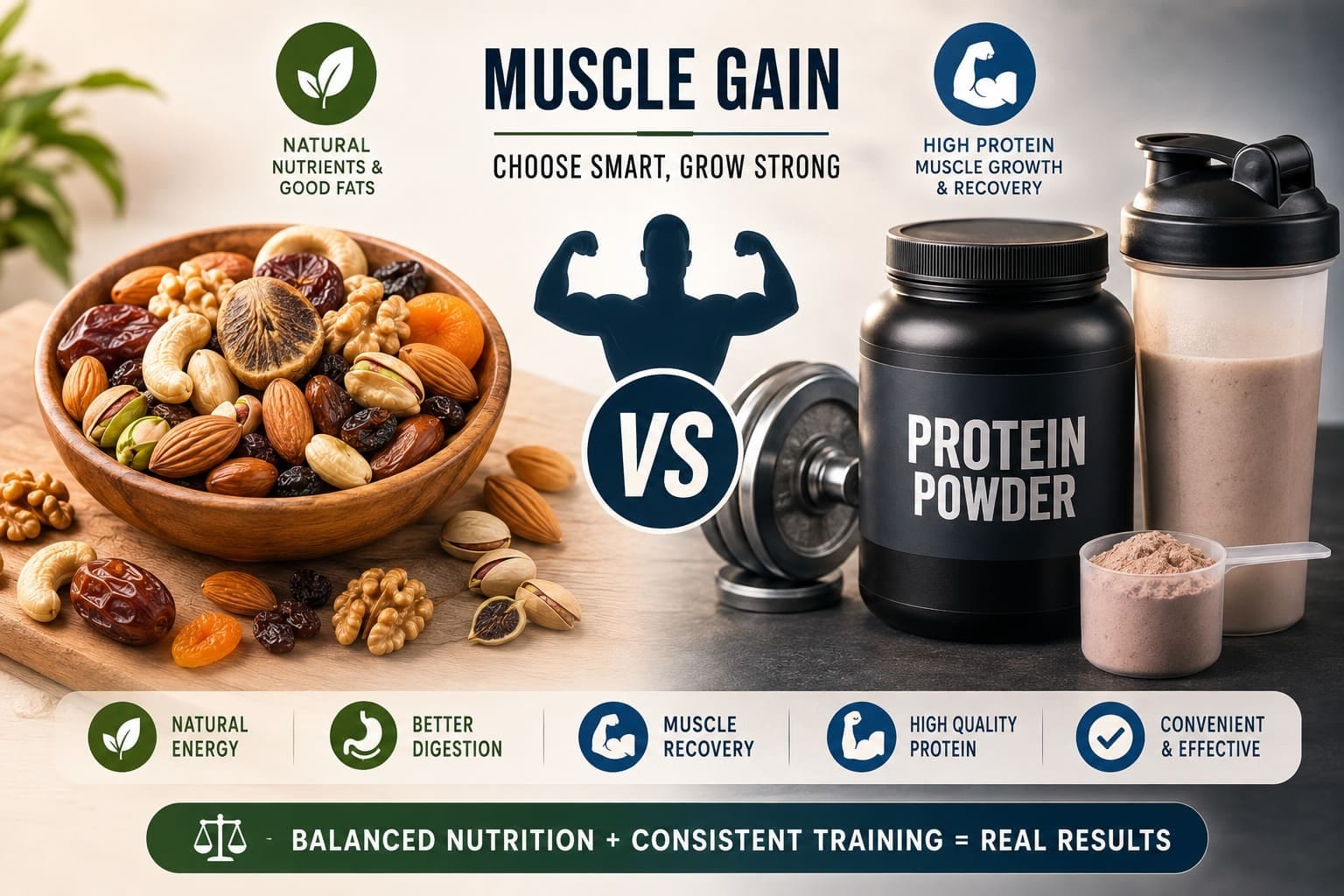
Building muscle sounds simple on paper lift weights eat more protein recover. In reality most people stall because nutrition decisions get confusing fast. One of the most common debates is whether dry fruits can replace protein supplements or if supplements are even necessary at all.
This comparison isn’t about “natural vs artificial.” Muscle hypertrophy doesn’t respond to ideology. It responds to calories protein quality digestion consistency and training stimulus. Dry fruits and protein supplements play very different roles and misunderstanding those roles is where progress slows.
This guide breaks down how each works where each fails and how to choose the right option based on your training level body type digestion budget and goals.
Understanding Muscle Gain Nutrition First
Before comparing foods the fundamentals matter.
Muscle growth depends on
- Adequate protein intake to trigger muscle protein synthesis
- Essential amino acids especially leucine
- Calorie surplus to fuel growth
- Resistance training that creates adaptation demand
- Recovery and digestion efficiency
Protein quantity alone isn’t enough. Protein quality absorption rate and timing influence how much of what you eat actually becomes muscle.
This is where dry fruits and protein supplements differ sharply.
What Are Dry Fruits in a Muscle Building Diet?
Dry fruits include almonds walnuts pistachios cashews dates raisins figs and apricots. Nutritionally they are dense whole foods with a mix of fats carbohydrates fiber and small amounts of protein.
Nutritional Profile of Dry Fruits
Dry fruits are known for
- Healthy fats including omega 3s (especially walnuts)
- Micronutrients like magnesium potassium zinc and iron
- Natural sugars that contribute calories
- Fiber that slows digestion
Protein Reality Check
While often assumed to be “protein rich” dry fruits are not efficient protein sources.
For example a typical handful (around 30 grams):
- Almonds: 6 g protein
- Cashews: 5 g protein
- Dates or raisins: 1 2 g protein
To reach muscle building protein targets using dry fruits alone calorie intake would skyrocket long before protein needs are met.
Dry fruits support muscle gain. They do not directly drive it.
What Are Protein Supplements?
Protein supplements are concentrated protein sources designed to make meeting daily protein requirements easier and more precise.
Common Types of Protein Supplements
- Whey Protein Concentrate fast digesting contains some lactose
- Whey Protein Isolate higher purity lower lactose
- Casein Protein slow digesting useful before sleep
- Plant Proteins pea soy rice blends for dairy free users
Why Supplements Exist
Protein supplements solve one specific problem getting enough high quality protein consistently without excessive calories or meal prep.
A single scoop of whey protein typically provides
- 20 25 g complete protein
- High leucine content
- Fast absorption post-workout
This directly stimulates muscle protein synthesis something dry fruits cannot do efficiently.
Dry Fruits vs Protein Supplements: Direct Comparison
| Factor | Dry Fruits | Protein Supplements |
|---|---|---|
| Protein Density | Low | Very high |
| Amino Acid Profile | Incomplete | Complete |
| Leucine Content | Low | High |
| Digestion Speed | Slow | Fast (whey) |
| Calorie Load | High | Moderate |
| Muscle Protein Synthesis | Indirect | Direct |
| Cost per gram protein | High | Lower |
| Convenience | Medium | High |
| Risk Factors | Overeating calories | Digestive issues, fake products |
This table highlights the core truth: these foods are not interchangeable.
Benefits of Dry Fruits for Muscle Gain
Dry fruits help muscle gain indirectly by supporting the environment needed for growth.
Supporting a Calorie Surplus
Many people especially hard gainers struggle to eat enough. Dry fruits pack calories into small portions making it easier to maintain a surplus without feeling constantly full.
Hormonal and Recovery Support
Hormone balance and recovery can be improved by the intake of healthy fats that help regulate hormones such as testosterone. Muscle contraction nerve function and recovery are supported by magnesium and potassium minerals that are found in the body.
Overall Health and Digestion
Intestinal health can be greatly enhanced by consuming fiber and antioxidants as they also help in improving cardiovascular markers which eventually will allow for continued training over the long term.
Dry fruits shine as supportive foods not primary muscle building tools.
Benefits of Protein Supplements
Protein supplements directly target the bottleneck in most muscle gain plans.
Efficient Muscle Protein Synthesis
Whey protein’s amino acid profile especially its leucine content activates muscle building pathways more effectively than plant heavy foods.
Precision and Consistency
Supplements remove guesswork. You know exactly how much protein you’re consuming which matters when targeting 1.6 2.2 g per kilogram of body weight.
Timing Advantage
Liquid protein is absorbed faster post workout when muscles are most receptive to amino acids.
Calorie Control
For people trying to gain lean mass without excessive fat protein supplements deliver protein without overwhelming calories.
Risks and Downsides to Consider
Neither option is dangerous on its own. Problems arise from misuse.
Risks of Overusing Dry Fruits
- Excess calorie intake leading to fat gain
- High sugar content from dates and raisins
- Expensive source of protein
- Digestive discomfort if consumed in large quantities
Risks of Protein Supplements
- Fake or adulterated products in some markets
- Digestive issues for lactose intolerant users
- Overreliance that displaces whole foods
Supplements should supplement a diet not replace it.
Cost Effectiveness What Actually Saves Money?
Looking at cost per gram of protein clarifies things quickly.
Dry fruits are nutrient dense but expensive as protein sources. Protein supplements when authentic usually deliver protein at a much lower cost per gram.
For long term muscle gain supplements are typically more economical for meeting protein targets while dry fruits remain valuable for calories and micronutrients.
How to Choose A Practical Decision Framework
Choose Dry Fruits If:
- You’re a beginner training 2 3 times per week
- You already meet protein needs through meals
- You struggle to eat enough calories
- You value whole food nutrition and digestion
Choose Protein Supplements If:
- You train 4 6 days per week
- You miss protein targets consistently
- You want measurable hypertrophy
- You need convenience or post workout speed
The Best Choice for Most People
A hybrid approach.
Protein supplements handle protein requirements. Dry fruits handle calories fats and micronutrients.
Beginner vs Intermediate vs Advanced Needs
Beginners
Most beginners can build muscle without supplements if meals are well planned. Dry fruits help fill calorie gaps early on.
Intermediate Lifters
As training volume increases hitting protein targets becomes harder. Protein supplements become useful here.
Advanced Lifters
Precise nutrition matters. Supplements are nearly essential while dry fruits play a secondary strategic role.
Timing When to Use Each
- Post workout Protein supplement for fast absorption
- Between meals Dry fruits for calorie support
- Before bed Casein protein or whole foods
- During bulking phases Both combined
Timing doesn’t replace total intake but it improves efficiency.
Common Mistakes That Stall Progress
- Assuming dry fruits can replace protein supplements
- Using supplements without progressive training
- Ignoring total calories
- Buying unverified protein brands
- Cutting out whole foods entirely
Most plateaus come from imbalance not lack of effort.
Is it possible to gain muscle without the help of supplements?
Mike Gillette CSCS answered this question saying "No supplements are not a requirement". However they are just tools that can make things easier. If you are able to consistently reach your protein and calorie intake through food then muscle growth will still take place. Supplements are essentially a shortcut to making the process easier and more certain.
Frequently Asked Questions
- Q: Are dry fruits enough for muscle building?
A: Dry fruits by themselves are not sufficient. They do not have enough protein concentration and lack a full set of essential amino acids that are vital for muscle growth. - Q: Is whey protein safe long term?
A: Whey protein should normally be safe for healthy people if it is consumed in accordance with daily protein requirements and from good brands. - Q: Which is better for beginners?
A: Beginners can rely on whole foods initially. Protein supplements become helpful as training intensity and protein needs increase. - Q: Can dry fruits replace protein supplements?
A: No. Dry fruits support calorie intake but cannot efficiently replace concentrated protein sources. - Q: Do dry fruits increase muscle mass?
A: They support muscle gain indirectly by providing calories and micronutrients not by directly stimulating muscle protein synthesis. - Q: What is better post workout?
A: Protein supplements especially whey due to faster digestion and amino acid delivery. - Q: Are protein supplements necessary for muscle gain?
A: They are not necessary but they significantly improve convenience consistency and efficiency.
Conclusion
Dried fruits and protein supplements are not rivals. They deal with different issues.
Dried fruits help to increase calorie intake and improve general health. Protein supplements provide the exact high quality protein needed to effectively stimulate muscle growth. Using one as a substitute for the other is the surest way to hinder progress.
For the majority of individuals the optimal plan is a balanced diet of whole foods as the base with supplements for accuracy. When nutrition training and recovery are in sync muscle gain is a matter of course rather than a source of frustration.